Published 09 Nov 2026
UGC Creators: What They Do, Costs and How to Hire One in 2026
Everything brands need to know about UGC creators in 2026: what they do, how UGC works, costs and rates, usage rights, scripts, briefs, and where and how to hire UGC creators for ads and social media.
Tags
Post content
What is a UGC creator?
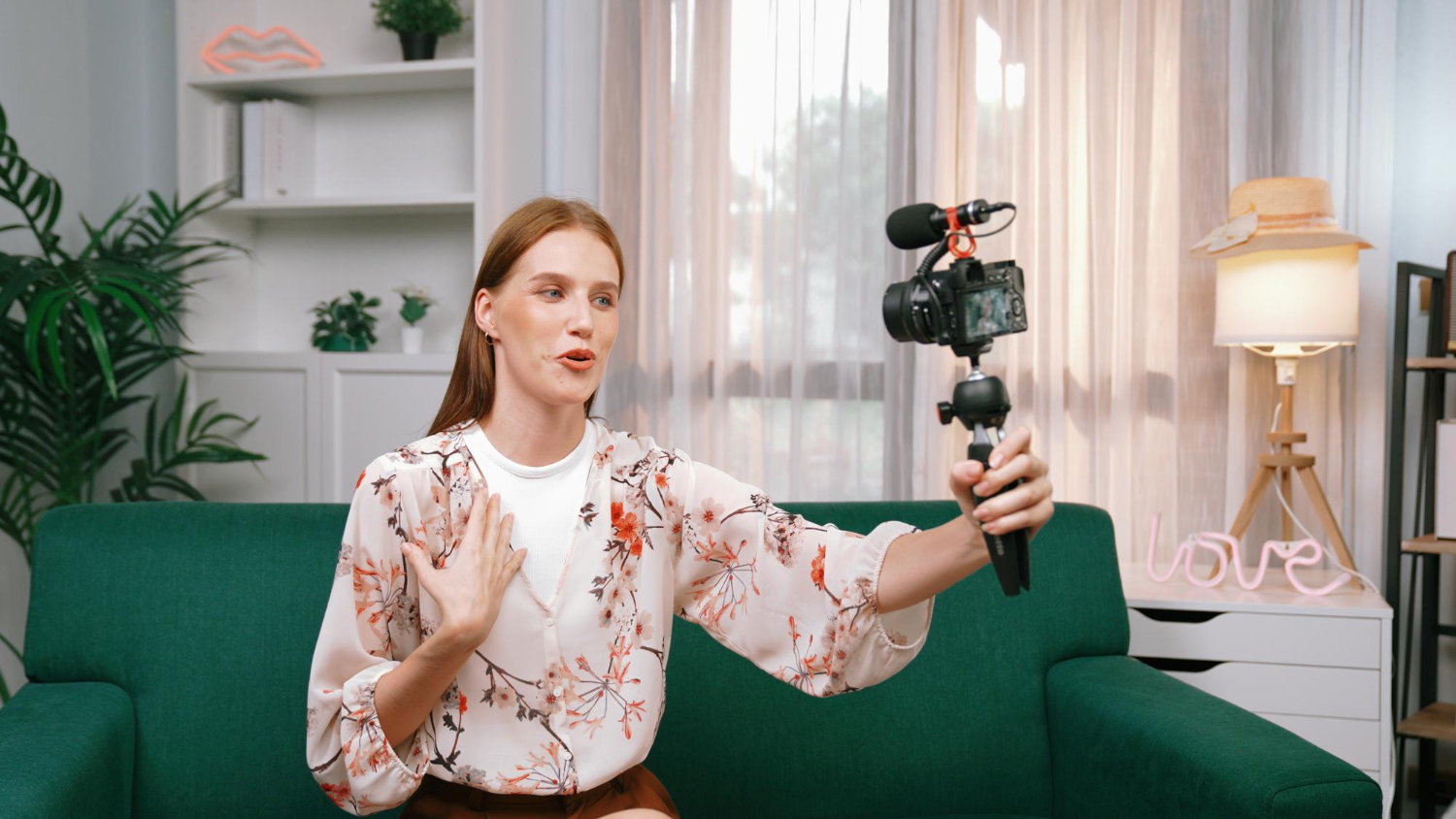
A UGC creator is a person who makes photos and short videos that look and feel like content from a real customer, and is paid by a brand to create them. UGC stands for user-generated content. The creator films themselves using, unboxing, or reviewing a product, and the brand uses that content in ads, on social media, on product pages, and in emails.
The key difference from an influencer is that a UGC creator is paid for the content itself, not for posting it to their own audience. A UGC creator does not need a large following. Brands hire them because their videos feel natural, relatable, and believable, which is what people expect to see in their feeds.
Do UGC creators need followers?
No. UGC creators are hired for the quality and authenticity of their content, not for the size of their audience. The content usually runs on the brand's own channels and ads, not on the creator's profile. A strong portfolio, natural on-camera presence, and good lighting and sound matter far more than follower count.
Paid UGC vs organic UGC
User-generated content started as anything real customers posted about a brand without being asked: a review, an unboxing video, a photo tagged on Instagram. That is organic UGC, and it is still valuable, but a brand cannot control when it appears, what it says, or whether it can be used in ads.
Paid UGC solves that. A brand briefs a UGC creator, the creator makes content in the same authentic style, and the brand receives the files with the rights to use them. You get the trust of customer content with the control of a planned campaign.
| Organic UGC | Paid UGC from a creator | |
|---|---|---|
| Who makes it | Real customers, unprompted | A hired UGC creator |
| Cost | Free | Paid per video or package |
| Control over message | None | Brief, script, and revisions |
| Usage rights | Must be requested from each customer | Agreed in advance |
| Volume | Unpredictable | Planned to your schedule |
UGC demand in 2026: why brands are hiring more UGC creators
Demand for UGC creators keeps rising because the way people discover and buy products has moved to short-form video. Fortune Business Insights values the user-generated content platform market at USD 8.48 billion in 2026 and projects it to reach USD 64.31 billion by 2034, a compound annual growth rate of 28.8 percent.
Several shifts are driving that demand:
- Ad fatigue with polished ads. Viewers scroll past content that looks like a traditional advert. Videos that look like a real person talking to the camera hold attention for longer.
- Short-form video everywhere. TikTok, Instagram Reels, and YouTube Shorts reward a constant supply of fresh videos, which is hard to produce in-house. If you are still deciding whether video is worth it, see why every business needs short-form video in 2026.
- Social commerce. Shoppers now buy directly inside social apps and on marketplaces, and product videos from real-looking people help them decide.
- Creative testing. Paid social works best when brands test many hooks and angles. UGC is the cheapest way to produce enough variations to test.
- Trust. People trust other people more than brands. A believable review from someone who looks like the buyer often converts better than a studio advert.
UGC statistics brands should know
- 88 percent of consumers trust recommendations from people they know, the most trusted source in Nielsen's 2021 Trust in Advertising study.
- 78 percent of shoppers feel more confident in a purchase when they view user-generated content (Bazaarvoice Shopper Experience Index, 2023, a survey of more than 7,000 shoppers).
- Nearly three in four shoppers in the same Bazaarvoice survey trust content from other shoppers more than brand-provided content on product pages.
- More than half of those shoppers say they are unlikely to buy a product without content from other shoppers to inform their decision.
What does a UGC creator do?
A UGC creator turns a brief into short, natural content that a brand can publish or run as ads. A typical project looks like this:
- Reads the brief and agrees on the angle, the key message, and any must-say points.
- Writes or refines a script and hook, unless the brand supplies one.
- Receives the product or gets access to the app or service.
- Films the content at home or on location, usually on a phone, with good light and clear sound.
- Edits the video with captions, cuts, on-screen text, and music, or delivers raw footage if agreed.
- Delivers the files in the formats you need, such as 9:16 for TikTok and Reels.
- Makes agreed revisions and confirms the usage rights you are buying.
Some UGC creators deliver finished, edited videos. Others deliver raw clips for your editor, and you can pair them with a short-form video editor to cut them into ads. Make sure the offer you choose states which one you will receive.
Types of UGC content brands buy
- Unboxing videos. First impressions as the product is opened. Strong for ecommerce and subscription boxes.
- Product reviews. An honest-sounding review of what the creator liked and how they use it.
- Tutorials and how-tos. Showing the product in use, step by step. Strong for beauty, tech, apps, and kitchen products.
- Testimonials. A talking-head video explaining the problem the product solved.
- Problem and solution. The creator shows a frustration, then the product fixing it. One of the most common ad formats.
- Before and after. Clear visual results, popular in skincare, cleaning, fitness, and home products. Check advertising rules for your industry before using these.
- Day-in-the-life. The product appears naturally within a routine.
- ASMR and sensory videos. Close-up sound and texture, popular for food, beauty, and packaging.
- Voiceover-only videos. B-roll of the product with the creator's voice. Useful when the creator does not want to appear on camera.
- UGC product photos. Lifestyle photos of the product in real settings for social posts and product pages.
- Hook packs. Several alternative opening lines filmed for the same video, used to test which first three seconds perform best.
UGC video examples by format
| Format | Example concept | Best for |
|---|---|---|
| Problem and solution | A creator struggles with a tangled phone cable, then shows a magnetic cable organiser keeping the desk tidy | Paid social ads |
| Tutorial | A creator shows three ways to style one scarf in under 30 seconds | Organic posts and product pages |
| Testimonial | A small business owner explains how a booking app cut missed appointments | Retargeting ads and landing pages |
| Unboxing | A creator opens a monthly snack box and reacts to each item | TikTok Shop and subscription offers |
| Before and after | A creator cleans one half of an oven door to show the difference | Ads and marketplace listings |
Where brands use UGC
- Paid social ads on TikTok, Meta (Facebook and Instagram), Snapchat, and YouTube.
- Organic social posts on TikTok, Instagram Reels, and YouTube Shorts.
- TikTok Shop and marketplace listings, including product videos on Amazon.
- Product pages on your own website, where a short review video sits next to the buy button.
- Email and landing pages, where UGC stills or GIFs add social proof.
- App store pages and onboarding for mobile apps.
Can you use UGC in paid ads?
Yes, if you have agreed paid usage rights with the creator. Organic usage rights usually cover your own social posts and website only. Running the content as ads, or through the creator's account with whitelisting or Spark Ads, normally needs paid usage rights, which increase the price. Agree on the channels and duration in writing before work starts.
UGC creator vs influencer vs traditional ads
| UGC creator | Influencer | Traditional ads | |
|---|---|---|---|
| What you pay for | The content | Access to their audience | Studio production |
| Followers needed | No | Yes, that is the value | No |
| Where content is posted | Your channels and ads | Their own profile | Your channels and media buys |
| Typical cost | Per video or package | Per post, often higher | Highest, with crew, studio, and actors |
| Turnaround | Days | Days to weeks | Weeks to months |
| Look and feel | Native and phone-shot | The creator's own style | Polished and branded |
| Usage rights | Agreed and bought with the content | Often limited or extra | Owned or licensed by the brand |
| Best for | Ads, product pages, testing | Awareness and reach | Brand campaigns and hero assets |
If you need reach, hire an influencer. If you need content that sells in your own ads and pages, hire a UGC creator. Traditional production still suits TV, launch films, and brand campaigns that need a polished finish. Many brands use all three: traditional ads for the brand story, influencers for awareness, and UGC creators for a steady supply of ad creative.
AI UGC vs human UGC creators
AI tools can now generate avatar videos that imitate UGC. They are fast and cheap, and they suit quick concept tests or simple explainer clips. They also have limits:
- Trust. Viewers increasingly spot AI avatars, and content that feels fake undermines the whole point of UGC.
- Real product use. An AI avatar cannot genuinely use, taste, apply, or unbox your product.
- Platform rules. Ad platforms are tightening rules on undisclosed synthetic content, and some require AI-generated content to be labelled.
- Emotion and nuance. The small reactions that make a review believable are still hard to fake.
Most brands get the best results from human UGC creators for core ads and product proof, with AI used for drafts and testing. For more on how AI is changing creative work, see how AI is changing the way freelancers deliver creative services.
Benefits of hiring a UGC creator
Brands hire UGC creators to get believable, ad-ready content faster and at a lower cost than traditional production, with the usage rights agreed before work starts. The main benefits are:
- Content that feels real. Natural, phone-shot content blends into feeds and earns more attention than polished ads.
- Lower cost than traditional production. No studio, crew, or actors for each video.
- Faster turnaround. Many creators deliver within days, not weeks.
- More variations for testing. You can afford several hooks, angles, and creators, then scale the winners.
- Clear usage rights. Unlike organic customer posts, you agree on the rights before the work starts.
- Diverse faces and voices. Hiring several creators lets you match content to different audiences and markets.
- Content for every channel. One shoot can produce ads, organic posts, product page videos, and photos.
Disadvantages and risks of UGC
- Inconsistent quality. Skill varies widely between creators. Always check samples and order a test video first.
- Usage rights confusion. If rights are not agreed in writing, you may not be allowed to run the content as ads or use it after a set period.
- Creative fatigue. UGC ads wear out. You need a steady pipeline, not one batch.
- Authenticity limits. Over-scripted UGC starts to look like a normal ad and loses its advantage.
- Compliance. Health, finance, and beauty claims are regulated. A creator cannot say things your brand is not allowed to say.
- Disclosure duties. Paid content must be disclosed correctly when it appears in a way that suggests an independent opinion.
When should you hire a UGC creator?
Hire a UGC creator when you need believable content faster or cheaper than your team can make it. Common moments include:
- Launching a new product and needing reviews and demos before real customer content exists.
- Starting or scaling paid social ads and needing enough creative to test.
- Your current ads are fatiguing, and cost per purchase is rising.
- Selling on TikTok Shop or Amazon and needing product videos for listings.
- Selling a product people do not yet trust, such as a new skincare brand, an app, or a subscription.
- Entering a new market and needing creators who look and sound like local buyers.
Which businesses use UGC most?
UGC works for almost any product people can see, use, or react to, but some industries rely on it heavily:
- Beauty, skincare, and haircare
- Fashion, jewellery, and accessories
- Health, fitness, and wellness
- Food, drink, and supplements
- Home, kitchen, and cleaning products
- Mobile apps and SaaS tools
- Pet products
- Baby and parenting products
- Tech gadgets and accessories
- Travel and local services
Does UGC work for B2B and SaaS?
Yes. B2B and SaaS brands use UGC to show the software in real use and to let buyers hear from people in their own role. The formats that work best are screen-recorded walkthroughs with a voiceover, short testimonials from someone who matches the target job title, and problem and solution videos for LinkedIn and Meta ads. Choose creators who understand the buyer's work, and expect higher rates than consumer UGC, because the creator needs to learn the product before filming.
Is UGC worth it for small businesses?
Yes, for most small businesses selling online. UGC costs far less than traditional video production, delivers quickly, and gives you enough content to test ads properly. Starting with a single test video from one or two creators keeps the risk low while you learn what works for your product.
How much does a UGC creator cost in 2026?
UGC creator rates vary with experience, niche, usage rights, and how much editing you need. These are typical market ranges in 2026, drawn from published creator rate guides. Actual prices on Osdire are set by each creator in their offer.
| Creator level | Typical price per video |
|---|---|
| Beginner UGC creator | $50 to $400 |
| Mid-level UGC creator | $150 to $1,000 |
| Experienced or premium UGC creator | $500 to $3,000 or more |
Other common prices:
- UGC photos: around $200 to $800 for a set of three to five lifestyle photos.
- Bundles: many creators offer packages of three, five, or ten videos at a lower price per video.
- Revisions beyond the included rounds: often $50 to $200 per extra round.
- Rush delivery: typically 25 to 50 percent on top of the base rate for delivery within about 48 hours.
Prices also vary by niche. Beauty, finance, and B2B software usually sit at the higher end, because they need more product knowledge or carry stricter rules on what can be said.
UGC pricing models: how creators charge
- Per video. One fixed price for one video. Best for a first test.
- Packages. A set number of videos, hooks, or photos at a lower price per item. Best once you know a creator fits your brand.
- Monthly retainer. A fixed monthly fee for an agreed number of videos. Best for brands that need fresh ad creative every month.
- Product-only or gifted. The creator receives the product instead of a fee. Common with beginners, but delivery dates and usage rights are harder to secure.
- Add-ons. Extra hooks, raw footage, extra aspect ratios, rush delivery, and paid usage rights are usually priced on top of the base rate.
What raises or lowers UGC creator rates?
- Experience and portfolio. Creators with proven ad results charge more.
- Video length and complexity. A 15-second clip costs less than a 60-second scripted demo.
- Scripting. Writing the script and hooks yourself lowers the price. Asking the creator to write them adds time.
- Editing. Raw footage costs less than a fully edited video with captions and music.
- Extra hooks and variations. Each alternative opening adds to the price, but costs far less than a new video.
- Usage rights. Paid ad usage, longer licences, and exclusivity all increase the price.
- Turnaround. Faster delivery costs more.
- Product shipping and returns. If the creator needs a physical product, factor in shipping costs.
UGC usage rights and licensing costs
Usage rights decide where and for how long you can use the content, and they often change the price more than the video itself.
- Organic usage. You can post the content on your own social profiles and website. This is usually included in the base price.
- Paid usage. You can run the content as ads. Expect paid usage across all ad channels for six to twelve months to add roughly 25 to 40 percent.
- Perpetual or unlimited rights. You can use the content in any way for as long as you like. This often adds 50 to 100 percent.
- Exclusivity. The creator agrees not to work with competitors for a set period. This can add 30 percent or more, and full exclusivity can double the price.
- Whitelisting and Spark Ads. The creator gives your brand permission to run ads through their own social account, such as TikTok Spark Ads or Meta partnership ads. Because the ad appears from the creator's handle, it is priced separately, often monthly.
Always write down the channels, the duration, and whether the rights can be renewed. To avoid surprises on the final bill, see how to avoid hidden costs when hiring freelancers.
Where to hire UGC creators
There are four main ways to hire UGC creators, and each suits a different budget and level of control.
- Freelance marketplace. You browse UGC creators' offers, compare samples and prices, and hire directly. Best for most small and mid-sized brands that want control over who they hire and what they pay. Osdire is a freelance marketplace where you can hire freelancers online for UGC and other creative work. You can browse UGC marketing services and UGC and influencer-style videos, compare samples, prices, delivery times, and what each offer includes, then order directly. If you prefer to describe your project first, you can post a project and receive offers from UGC creators. Your payment is held securely by Osdire and released to the creator only after you approve the work. Buyer charges are listed on the Osdire fees page.
- UGC platform. A dedicated platform matches you with creators, often for a monthly subscription plus the cost of the content.
- UGC agency. The agency handles strategy, creator selection, scripts, and editing. Best for brands that want everything done for them and have a monthly budget to match.
- Direct outreach. You search hashtags such as #ugccreator on TikTok and Instagram and contract creators yourself. Cheapest in fees, but slowest, and you carry all the risk on payment and delivery.
How to hire a UGC creator, step by step
Paid UGC works in three stages: you brief a creator, the creator films and delivers the content, and you publish or run it as ads within the usage rights you agreed. These are the steps to get it right:
- Set your goal. Decide whether the content is for ads, organic posts, product pages, or all three. This decides the format and the rights you need.
- Write a short brief. Cover the product, the audience, the key message, the format, and the deadline. There is a checklist below.
- Shortlist creators. Look for creators whose existing videos match your audience, tone, and niche.
- Check portfolios properly. Watch full videos, not just thumbnails, and judge them on the points in the vetting section below.
- Agree on the deliverables and rights. Confirm the number of videos, hooks, length, raw or edited files, revisions, and usage rights before ordering.
- Start with a test video. Order one video before committing to a bundle.
- Send the product early. Allow time for shipping and for the creator to use the product genuinely.
- Review and request revisions within the agreed rounds.
- Test, then scale. Run the best videos, measure results, and rehire the creators whose content performs.
For more on working with video creators in general, see how to hire a TikTok or Reels video editor for your brand.
How long does it take to get UGC videos?
Most UGC creators deliver within five to ten days of receiving the product, depending on the number of videos and whether editing is included. Physical products need extra time for shipping. Many creators also offer rush delivery within about 48 hours at an extra cost.
How to vet a UGC creator's portfolio
- Hook strength. Do the first three seconds make you want to keep watching?
- On-camera presence. Do they sound natural and believable rather than scripted?
- Lighting and sound. Is the face well lit and the voice clear without background noise?
- Niche fit. Have they made content for products like yours and buyers like yours?
- Variety. Can they handle different formats, such as reviews, demos, and testimonials?
- Editing quality. Are captions accurate and cuts clean?
- Communication. Do they answer questions about your brief clearly before you order?
What to include in a UGC brief
A clear brief is the single biggest factor in getting usable UGC. Include:
- Brand and product: what it is, what it costs, and who it is for.
- Goal: ads, organic posts, product page, or app store.
- Target audience: age, lifestyle, and the problem they want solved.
- Key message: the one thing viewers must remember.
- Must-say and must-not-say points: including claims you are not allowed to make.
- Format: video length, aspect ratio (usually 9:16), number of videos, and hooks.
- Style references: two or three examples of videos you like.
- Deliverables: raw or edited, captions, music, file format.
- Usage rights: channels, duration, and any exclusivity.
- Timeline: product arrival date, first draft date, and final delivery date.
If you also hire a separate editor, our guide on how to write a brief for a video editor covers the editing side.
UGC script template
A common structure for a 30-second UGC ad has five parts. Share it with your creator as talking points, not a word-for-word script.
| Part | Timing | What happens | Example line |
|---|---|---|---|
| Hook | 0 to 3 seconds | Stop the scroll with a problem, surprise, or result | "My morning coffee was costing me $6 a day." |
| Problem | 3 to 8 seconds | Show the frustration the buyer recognises | "Café queues, cold cups, and a bill I hated looking at." |
| Product | 8 to 18 seconds | Show the product in real use | "Now I make cold brew at home with this jar. Coffee in, water in, fridge overnight." |
| Proof | 18 to 25 seconds | Show the result or a specific benefit | "It tastes better than my café order and costs a fraction." |
| Call to action | 25 to 30 seconds | Tell the viewer what to do next | "Tap the link and try it this week." |
UGC video specs by platform
Ask for vertical 9:16 video at 1080 x 1920 pixels as the master file. It covers most placements, and an editor can crop it for feeds.
| Platform and placement | Aspect ratio | Typical length for UGC ads |
|---|---|---|
| TikTok in-feed | 9:16 | 15 to 35 seconds |
| Instagram and Facebook Reels | 9:16 | 15 to 30 seconds |
| YouTube Shorts | 9:16 | 15 to 60 seconds |
| Facebook and Instagram feed | 4:5 or 1:1 | 15 to 30 seconds |
| Stories (Instagram, Facebook, Snapchat) | 9:16 | 6 to 15 seconds |
Keep captions and key visuals away from the top and bottom edges, where app buttons and text cover the screen. Platforms update their specs often, and the ads manager for each platform shows the current limits.
Can you use the same UGC video on every platform?
Yes, if your usage rights cover each platform and you adapt the file. Export a clean version without another app's watermark, crop to the right aspect ratio, check that captions sit inside the safe zone, and trim the length to suit the placement. Many brands order one master video and ask for 9:16 and 4:5 versions in the same order.
UGC hooks that work in the first three seconds
The hook decides whether anyone watches the rest of the video. These formats are widely used because they work:
- The problem hook: "If your skin feels tight after washing, watch this."
- The surprise hook: "I did not expect a $20 product to replace my whole routine."
- The result hook: opening on the finished result, then explaining how.
- The objection hook: "I thought this was a gimmick until I tried it."
- The list hook: "Three things I wish I knew before buying a standing desk."
- The direct callout: "Small business owners, this one is for you."
Ask your UGC creator to film several hooks for the same body. It is the cheapest way to improve ad results.
UGC contract essentials
Whether you hire through a marketplace or directly, agree on these points in writing:
- The number of videos, photos, and hooks, and their length and format
- Whether you receive raw footage, edited files, or both
- The number of revision rounds included
- The usage rights, channels, duration, and renewal terms
- Any exclusivity period
- Delivery dates
- Payment terms and what happens if the work is not delivered
- Disclosure responsibilities if the content appears on the creator's own account
Who owns UGC content?
The creator owns the content until they transfer or license the rights to your brand. What you can do with it depends on the usage rights you agree to: where you can use it, for how long, and whether you can edit it. If you need full ownership or perpetual use, state that in the brief and expect a higher price.
Disclosure rules for paid UGC
Paid UGC is advertising, and advertising rules apply. In the US, the Federal Trade Commission's endorsement guidance requires paid relationships to be disclosed when content could look like an independent opinion. In the UK, the Advertising Standards Authority requires ads to be obviously identifiable as ads, for example with a clear "#ad" label where the content appears on a creator's own profile.
In practice, content that runs from your brand's own ad account is already clearly an ad. Content posted on the creator's profile, or run through whitelisting, needs a clear disclosure. Creators must also only make claims that are true for them and that your product is allowed to make.
Tips to get better UGC, and common mistakes
Tips:
- Give the creator the problem your buyer has, not just a list of product features.
- Let creators use their own words, and keep scripts as talking points.
- Ask for captions burned in, because most people watch without sound.
- Request both a 15-second and a 30-second cut from the same footage.
Common mistakes:
- Over-scripting until the video looks like a normal advert.
- Skipping usage rights and discovering later that you cannot run the video as an ad.
- Judging creators on follower count instead of content quality.
- Ordering a large bundle before testing one video.
- Running one winning video until it stops working instead of refreshing creative regularly.
How to measure UGC performance
Measure UGC by what it does, not by how it looks. The most useful metrics are:
- Hook rate: the share of viewers who watch past the first three seconds.
- Hold rate or average watch time: whether people stay until the message lands.
- Click-through rate: whether viewers act on the content.
- Cost per purchase or cost per lead: the number that decides whether to scale.
- Return on ad spend: revenue earned for each unit of ad spend.
Test several creators and hooks at once with a small budget, keep the winners, and replace the rest. For producing video at this pace without a large in-house team, see how to scale short-form video production without hiring a large team.
How to manage and scale UGC creators
Scaling UGC means turning one-off orders into a repeatable system. Brands that do this well follow the same habits:
- Keep a creator roster. Record each creator's niche, rates, delivery times, rights agreed, and the results their videos achieved.
- Reuse one brief template. A standard brief and a standard feedback format save time and keep content on message.
- Review before you publish. Check product claims, brand and product names, caption accuracy, and that the files match the agreed rights.
- Refresh creative on a schedule. Order new hooks or new videos when hook rate or click-through rate starts to fall.
- Reward your best creators. Move proven creators to packages or a monthly retainer, because they already know your product and audience.
- Keep everything in one place. Hiring through one marketplace keeps briefs, messages, files, and payments together as the number of creators grows.
How many UGC creators should you hire?
Start with three to five creators making one or two videos each. Different faces, voices, and angles perform differently with different audiences, and testing several creators shows you which ones your buyers respond to. Once you know the winners, rehire those creators and order more variations from them.